
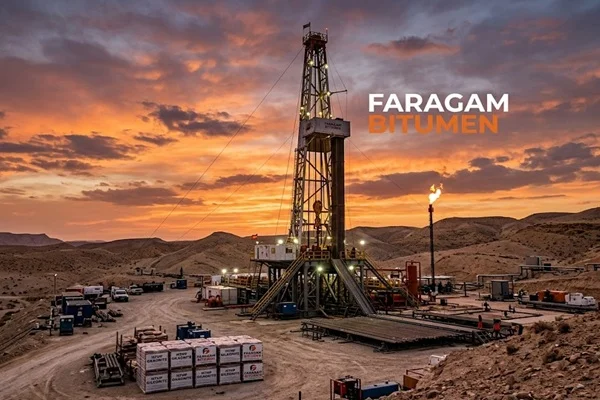
Gilsonite Optimum Performance in HTHP Oil and Gas Drilling
Introduction to HTHP Drilling Challenges
Modern oil and gas exploration increasingly ventures into ultra-deep reservoirs characterized by High-Temperature, High-Pressure (HTHP) environments. In these grueling conditions, standard drilling fluid additives degrade rapidly, leading to wellbore instability, catastrophic fluid loss, and differential pipe sticking. Achieving Gilsonite optimum performance has become a cornerstone strategy for drilling engineers looking to maintain mud rheology and secure fragile formations under extreme thermal stress.
What is HTHP Grade Gilsonite?
Defining the Natural Hydrocarbon Resin
Gilsonite—scientifically known as uintaite—is a naturally occurring solid carbonaceous resin. While it is categorized as a natural asphalt, its unique chemical structure sets it apart from refinery-produced bitumen. The HTHP drilling grade is meticulously selected and processed to retain a high softening point and specific particle size distribution, making it the premier multi-functional additive for both oil-based muds (OBM) and water-based muds (WBM).
Fundamental Characteristics of High-Performance Gilsonite
To achieve Gilsonite optimum performance in high-pressure environments, the material must possess precise physical and chemical traits.
High Softening Point
The defining characteristic of HTHP-grade Gilsonite is its elevated softening point, typically ranging between 175°C and 235°C (350°F to 450°F). This high thermal boundary ensures that the material does not liquefy prematurely in the upper wellbore sections but instead activates precisely at the deep bottomhole hot zones.
Malleable Sealing & The “Smear Effect”
Unlike rigid, inorganic weighting agents, Gilsonite behaves semi-plastically under elevated temperatures. As the drill bit penetrates micro-fractures and porous sandstone, the semi-molten Gilsonite extrudes into these micro-voids. This creates a highly effective, paper-thin, impermeable physical seal along the wellbore wall—a phenomenon known in the field as the “smear effect.”
Low Ash and High Purity
Premium drilling-grade Gilsonite features an incredibly low ash content (typically less than 1.5% to 3%). This ensures that the mud system is not contaminated with inert abrasive minerals that could damage directional drilling tools or wear out mud pumps.
Mechanics of Gilsonite Optimum Performance in Mud Systems
[Elevated Wellbore Temperature] ➔ [Gilsonite Reaches Softening Point] ➔ [Semi-Plastic Extrusion] ➔ [Micro-Fracture Plugging & Impermeable Filter Cake]
1. Superior Filtration and Fluid Loss Control (FLC)
Uncontrolled fluid loss into a hydrocarbon reservoir causes severe formation damage. Gilsonite acts as a highly efficient fluid loss control agent. By tightly sealing the pore throats of the formation, it restricts the liquid phase of the drilling mud from invading production zones. Laboratory and field data indicate that incorporating high-softening-point Gilsonite reduces HTHP fluid loss by up to 45% compared to traditional formulations.
2. Shale Inhibition and Wellbore Stabilization
Shale formations are notorious for absorbing water from drilling fluids, causing them to swell, slough, and collapse into the wellbore. Gilsonite acts as a powerful physical hydrophobic barrier. By coating the clay surfaces, it prevents water molecules from altering the shale chemistry, thereby preserving wellbore geometry and avoiding costly “tight hole” scenarios.
3. Mitigating Differential Sticking
When the pressure inside the wellbore is significantly higher than the formation pressure, the drill string can become firmly wedged against the thick filter cake of a permeable zone. Because Gilsonite produces an incredibly thin, slick, and tough filter cake, it drastically reduces the contact area and friction coefficient, effectively eliminating non-productive time (NPT) caused by stuck pipes or logging tools.
Comparative Analysis: Gilsonite vs. Alternative Additives
To highlight why Gilsonite remains the industry benchmark, the table below compares its performance profile against common alternative fluid loss control and wellbore strengthening materials:
| Performance Metrics | High-Point Gilsonite (Natural) | Sulfonated Asphalt | Synthetic UHT Co-Polymers | Organophilic Lignite |
| Thermal Stability Limit | Excellent (Up to 260°C / 500°F) | Moderate (Up to 180°C) | High (Up to 230°C) | Low to Moderate (< 160°C) |
| Mechanism of Action | Dual (Malleable Plugging + Smear Seal) | Chemical Dispersion | Viscosity Modification | Viscosity & Matrix Adsorption |
| Wellbore Strengthening | Superior (Plugs micro-fractures) | Mild | Low | Negligible |
| Cost Efficiency | High (Reduces costs by 40–80%) | Moderate | Very Low (Expensive) | High (But limited depth) |
| Environmental Impact (HSE) | Non-toxic, Natural | Highly Soluble/Chemical | Synthetic Residues | Moderate |
Global Export Destinations for Drilling-Grade Gilsonite
Due to the intense concentration of complex, ultra-deep, and offshore drilling operations around the world, high-grade HTHP Gilsonite is heavily exported to major oil hubs. Key global destinations include:
-
The Middle East: Massive onshore gas exploration fields and heavy oil developments in the UAE, Oman, and Saudi Arabia.
-
The North Sea: Demanding offshore environments managed by the UK and Norway, requiring stringent HSE compliance alongside thermal stability.
-
Southeast Asia: Deepwater drilling blocks across Malaysia, Indonesia, and Vietnam where logging tool sticking is highly prevalent.
-
The Americas: Offshore deepwater projects in the Gulf of Mexico and the pre-salt basins of Brazil.
Faragam Bitumen: A Premier Supplier and Exporter
When sourcing materials to achieve Gilsonite optimum performance, consistency in particle size and softening point is paramount. Faragam Bitumen has established itself as a world-class supplier and exporter of premium drilling-grade Gilsonite.
By utilizing rigorous quality control frameworks, Faragam Bitumen ensures that every batch meets exact American Petroleum Institute (API) standards. Their specialized processing facilities can tailor ash contents and mesh sizes to perfectly align with specific water-based or oil-based mud configurations. For global operators seeking reliable supply lines, minimal lead times, and uncompromised purity in their HTHP drilling campaigns, Faragam Bitumen stands out as a trusted industrial partner.
Driving Efficiency in Extreme Environments
Maximizing drilling efficiency while managing escalating wellbore risks requires reliable, field-proven chemistries. Natural HTHP Gilsonite remains unmatched in its ability to simultaneously control fluid loss, stabilize shale, and prevent differential sticking under intense thermal conditions. By partnering with premium exporters like Faragam Bitumen, exploration companies can secure the consistent, high-purity material required to guarantee optimum performance on their deepest assets.
Gilsonite optimum performance, HTHP drilling gilsonite, oil-based drilling fluid additive, gilsonite for drilling mud, fluid loss control additive, natural asphalt drilling additive, gilsonite exporter, HTHP filtration control, gilsonite supplier, drilling fluid materials


