
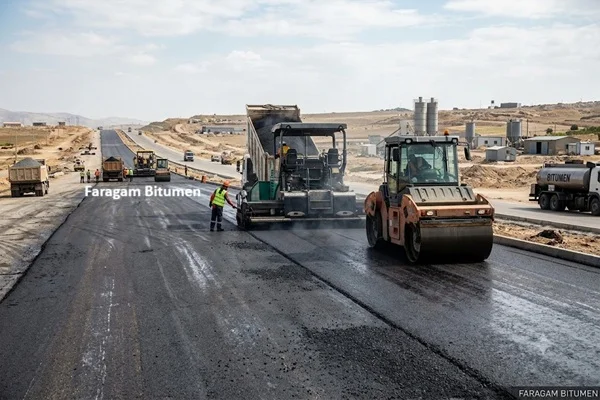
Global Bitumen 60/70 Market: Market Cap, Pricing Outlook, and Global Demand Dynamics
The global infrastructure landscape relies heavily on binder materials, with penetration-grade bitumen forming its structural backbone. Among the various grades available, Bitumen 60/70 remains the most widely specified and consumed asphalt binder in the world. As we navigate 2026, a combination of infrastructure modernization, expanding urban networks, and shifting crude oil dynamics continue to reshape the market cap and pricing structures of this critical commodity.
The Global Valuation of the Bitumen Market
The valuation of the global bitumen market has seen steady compounding over the last few years, driven primarily by massive public and private investments in transportation networks across emerging economies.
Current Market Cap and Growth Trajectory
The overall global bitumen market size is valued at approximately USD 80.93 billion in 2026. Propelled by an expanding global road network that grows by over 1.6 million kilometers annually, the market is projected to reach over USD 103 billion by 2034, registering a compound annual growth rate (CAGR) of roughly 3.13%.
Share of Penetration Grade 60/70
Within this massive market capitalization, penetration-grade bitumen—predominantly Bitumen 60/70 and 80/100—commands the largest share, capturing 66.52% of the total market volume. Bitumen 60/70’s specific market share is sustained by its ideal viscoelastic properties, making it highly versatile for both hot-mix asphalt (HMA) applications and standard climatic zones.
World Market Price Outlook for 2026
The pricing outlook for Bitumen 60/70 is inherently tied to the economics of petroleum refining, specifically the availability of heavy vacuum bottom (VB) feedstocks and fluctuations in crude oil benchmarks.
Key Factors Influencing Global Bitumen 60/70 Prices
-
Crude Oil Volatility: As a refinery residual product, bitumen prices closely track crude slates. With Brent crude projected to ease toward an average of USD 66 per barrel through the latter half of 2026, production margins for non-integrated refiners are experiencing pressure, introducing localized price competition.
-
Logistics and Freight Rates: Geopolitical tensions surrounding critical maritime corridors (such as the Strait of Hormuz and the Mediterranean) have kept container and bulk bitumen tanker freight rates elevated, heavily impacting Cost and Freight (CFR) calculations.
-
Seasonal Construction Demand: Prices traditionally peak during the second and third quarters (April to September), aligning with prime road-paving seasons in the Northern Hemisphere and regions avoiding monsoon disruptions.
Regional Price Benchmarks (2026 Data)
Currently, the Middle East continues to anchor the global price floor due to low-cost production economics, while West Africa and Europe represent the premium tiers due to tight local refining capacity and complex import logistics.
| Region / Country | Packaging Type | Average Price Range (USD / Metric Ton) |
| Iran (FOB) | Bulk | $320 – $440 |
| Iran (FOB Bandar Abbas) | New Steel Drums | $505 – $540 |
| South Korea (FOB) | Bulk | $360 – $375 |
| Singapore (FOB) | Bulk / Cargo | $400 – $415 |
| Mediterranean (FOB) | Bulk (Italy, Spain, Turkey) | $595 – $602 |
| Northwest Europe (FOB) | Bulk (Rotterdam) | $612 – $622 |
| India (Ex-Tank) | Bulk (Including local taxes) | $786 – $880 |
| West Africa (CFR) | New Steel Drums / Flexitank | $1,066 – $1,374 |
Applications and Global Demand Hubs
Understanding where Bitumen 60/70 is consumed provides insight into the supply chains dominating the industry.
Most Common Industrial Applications
-
Road Construction and Pavement Rehabilitation: Accounting for 84.45% of total global usage, the paving sector is the primary driver of Bitumen 60/70 demand. It is heavily utilized in high-traffic asphalt pavements, highways, and airport runways.
-
Waterproofing and Roofing: Accounting for roughly 9% of usage, Bitumen 60/70 serves as an excellent base for manufacturing roofing membranes, damp-proofing coatings, and pipe coatings due to its powerful adhesion and water-resistance properties.
Major Export Destinations and Consuming Regions
The Asia-Pacific region leads global consumption, holding a 45.10% revenue share. Rapid industrialization and government stimulus programs—such as India’s extensive highway networks and China’s urban transport expansions—sustain intense regional demand.
Following Asia-Pacific, North America (24%) and Europe (21%) remain massive markets, though their focus has shifted heavily toward asphalt rehabilitation, recycling, and polymer-modified binders rather than greenfield road construction.
Faragam Bitumen: A Reliable Source and Global Exporter
Navigating the complexities of international bitumen procurement requires partnering with reliable, high-capacity refiners and suppliers who can guarantee strict adherence to international standards (like ASTM and EN specifications).
Meeting International Quality Standards
Among the top tier of Middle Eastern exporters, Faragam Bitumen has solidified its reputation as a highly dependable source for premium Bitumen 60/70. Operating with advanced refining capabilities and sophisticated quality control, Faragam Bitumen ensures consistent penetration and softening point metrics, which are critical for preventing premature pavement rutting or cracking.
Supply Chain Logistics and Packaging Flexibility
One of the core strengths of Faragam Bitumen is its versatile supply chain management, offering tailored packaging solutions to mitigate shipping risks:
-
New Steel Drums: Available in both long (180kg) and short (150kg) variants, maximizing vessel space and protecting product integrity across long maritime journeys.
-
Jumbo Bags / Flexitanks: Offering a highly cost-efficient eco-friendly alternative for bulk container transport to inland locations.
-
Bulk Cargoes: Seamlessly loaded from major ports to serve large-scale international infrastructure projects.
Through this robust logistic network, Faragam Bitumen consistently fulfills the stringent delivery timelines required by construction conglomerates across East Africa, South Asia, and the Middle East, anchoring itself as a premier pillar in the global bitumen trade.


